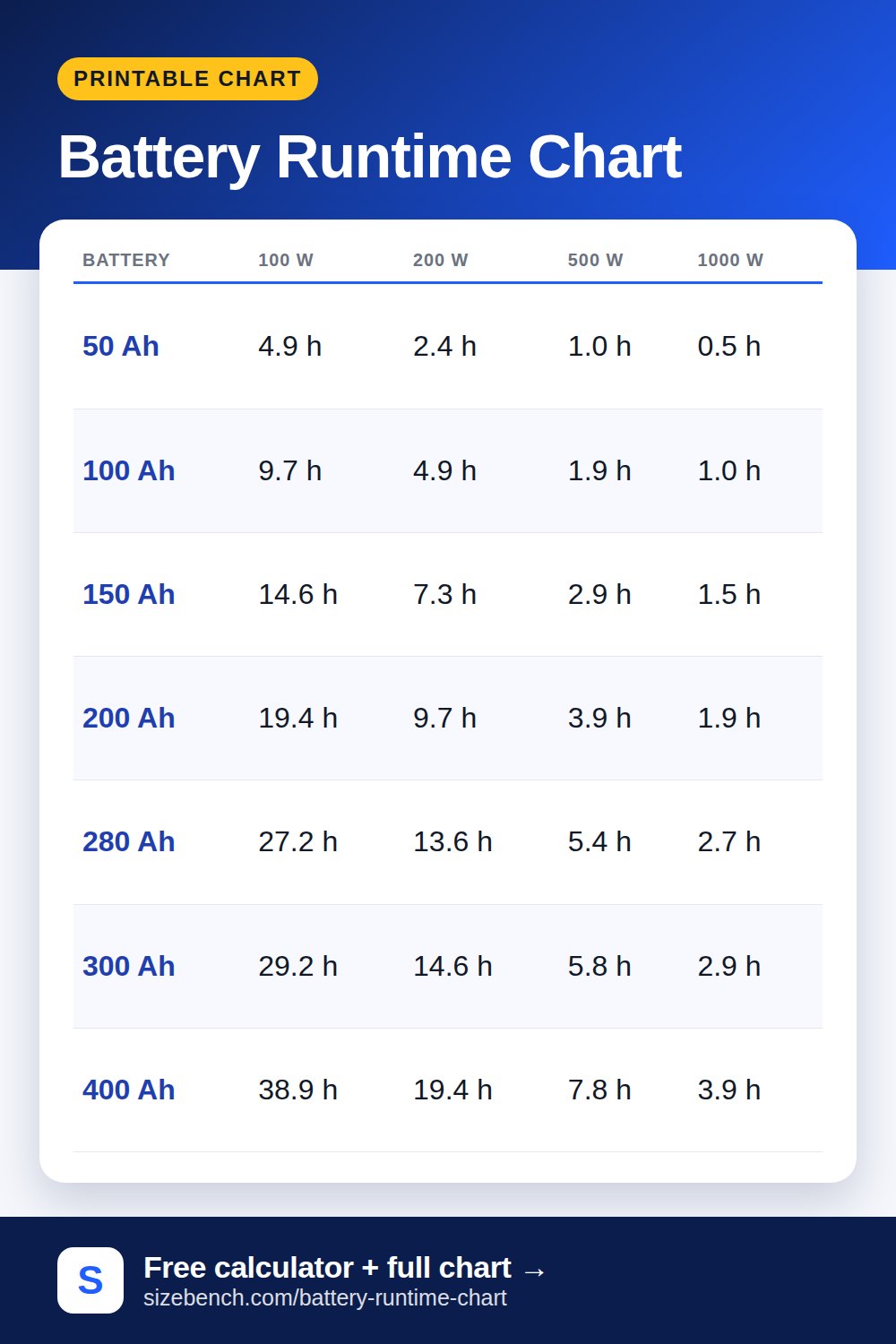
Runtime = Ah × 12 V × usable depth × inverter efficiency ÷ load. The chart uses 90% usable capacity for LiFePO4, 50% for lead-acid and a 90% efficient inverter.
Free, no sign-upInstant resultsUpdated October 2026
LiFePO4 (lithium) 12 V, through an inverter
Battery
50 W
100 W
200 W
300 W
500 W
1000 W
1500 W
50 Ah
9.7 h
4.9 h
2.4 h
1.6 h
1.0 h
0.5 h
0.3 h
100 Ah
19.4 h
9.7 h
4.9 h
3.2 h
1.9 h
1.0 h
0.6 h
150 Ah
29.2 h
14.6 h
7.3 h
4.9 h
2.9 h
1.5 h
1.0 h
200 Ah
38.9 h
19.4 h
9.7 h
6.5 h
3.9 h
1.9 h
1.3 h
280 Ah
54.4 h
27.2 h
13.6 h
9.1 h
5.4 h
2.7 h
1.8 h
300 Ah
58.3 h
29.2 h
14.6 h
9.7 h
5.8 h
2.9 h
1.9 h
400 Ah
77.8 h
38.9 h
19.4 h
13.0 h
7.8 h
3.9 h
2.6 h
Lead-acid / AGM 12 V (50% depth of discharge)
Battery
50 W
100 W
200 W
300 W
500 W
1000 W
1500 W
50 Ah
5.4 h
2.7 h
1.4 h
0.9 h
0.5 h
0.3 h
0.2 h
100 Ah
10.8 h
5.4 h
2.7 h
1.8 h
1.1 h
0.5 h
0.4 h
150 Ah
16.2 h
8.1 h
4.0 h
2.7 h
1.6 h
0.8 h
0.5 h
200 Ah
21.6 h
10.8 h
5.4 h
3.6 h
2.2 h
1.1 h
0.7 h
280 Ah
30.2 h
15.1 h
7.6 h
5.0 h
3.0 h
1.5 h
1.0 h
300 Ah
32.4 h
16.2 h
8.1 h
5.4 h
3.2 h
1.6 h
1.1 h
400 Ah
43.2 h
21.6 h
10.8 h
7.2 h
4.3 h
2.2 h
1.4 h
High loads drain lead-acid batteries faster than the chart shows (Peukert effect). Check the battery's maximum discharge current before running large loads.
Runtime
–
How we calculated this
For estimating and educational purposes only. Results are approximate and are not a substitute for a licensed professional, the manufacturer's instructions or your local code. Disclaimer
Run 12 V appliances directly when possible to skip inverter losses, and switch to a 24 V or 48 V bank for loads above about 1,500 W to keep currents manageable.