The case: a 10,000 BTU window unit whose nameplate reads 115 V, 8.5 A. The bedroom's four receptacles and the hallway ceiling light are all on one 15 A breaker wired with 14 AWG copper. Besides the AC, the room runs a TV, a laptop, lamps and phone chargers, about 258 W together.
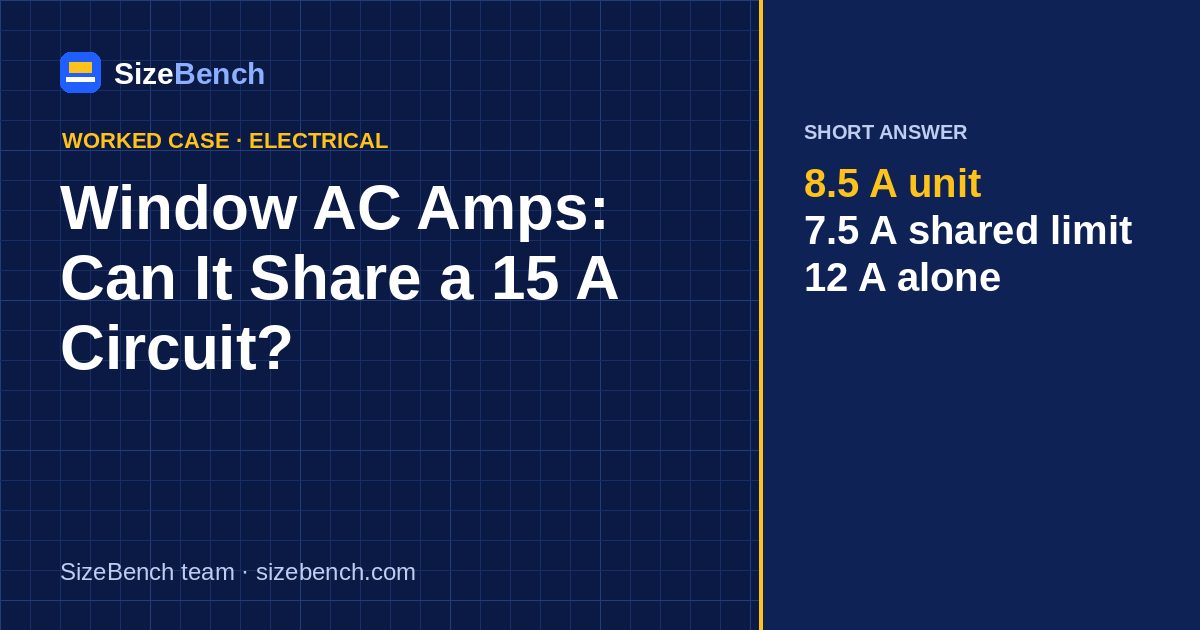
Short answer: the breaker probably will not trip, but the installation does not meet the code limit. When a room air conditioner shares a circuit with lights or other outlets, its marked current may be at most 50% of the breaker rating: 7.5 A on a 15 A circuit. This unit draws 8.5 A. Alone on that same circuit it would be fine, because the limit rises to 80%, or 12 A. Your choices are a dedicated circuit, a 20 A shared circuit (limit 10 A), or a smaller unit.

1. Read the nameplate, not the box
The front of the carton gives cooling in BTU per hour. The number that matters for wiring is on the rating plate, usually on the side of the chassis or behind the front grille. Look for:
- Rated current (A). This is the figure the code limits refer to. Here it is 8.5 A.
- Voltage. Small units are 115 V or 120 V and use an ordinary NEMA 5-15 plug. Units that need a 20 A outlet have a 5-20 plug, with one blade turned sideways, and the biggest ones are 230 V.
- Watts. Often printed next to the amps. At 120 V, 8.5 A is about 1,020 VA. Real watts come out a little lower because the compressor motor's power factor is below 1.
The plug is the manufacturer's own statement of the circuit the unit expects. If the plug is a 5-20 and your outlet is a 5-15, the unit needs a 20 A circuit. Never use an adapter to make it fit.
2. The two code limits for room air conditioners
The NEC treats a cord-and-plug room air conditioner as a motor-driven appliance with two simple caps:
- Alone on the circuit: the unit's marked rating may not exceed 80% of the branch-circuit rating.
- Sharing with lights, other outlets or appliances: the cap drops to 50%.
The 80% cap reflects the fact that an air conditioner runs for hours at a time on a hot day. The 50% cap leaves room for the other loads that share the circuit.
| Breaker | Alone on circuit (80%) | Shared circuit (50%) | This unit (8.5 A) alone | This unit shared |
|---|---|---|---|---|
| 15 A | 12.0 A | 7.5 A | yes | no |
| 20 A | 16.0 A | 10.0 A | yes | yes |
3. What is already on the circuit
Before the AC goes in, here is what the bedroom and hallway load looks like on an ordinary evening:
| Load | Watts | Amps at 120 V |
|---|---|---|
| LED ceiling light | 18 | 0.15 |
| Two table lamps | 20 | 0.17 |
| TV and streaming box | 110 | 0.92 |
| Laptop charger | 65 | 0.54 |
| Phone chargers | 15 | 0.12 |
| Hallway lights | 30 | 0.25 |
| Total without AC | 258 | 2.15 |
With the air conditioner running, the circuit carries about 10.7 A. That is under 15 A, so the breaker holds, and that is why many people conclude everything is fine. The trouble comes from the loads that come and go. A 1,500 W hair dryer or space heater plugged into the same circuit adds 12.5 A. The total then reaches 23.1 A and the breaker trips, usually in the middle of a hot night.
4. Typical amps by window unit size
Nameplates vary by brand and efficiency, so check your own unit. To show the pattern, the table below estimates current from cooling capacity. It assumes an energy efficiency ratio of 11 BTU per watt-hour, a typical figure for current models, and a power factor of 0.95.
| Unit size | Estimated watts | Estimated amps | Shared 15 A (7.5 A) | Alone 15 A (12 A) | Shared 20 A (10 A) |
|---|---|---|---|---|---|
| 5,000 BTU | 455 | 4.0 | yes | yes | yes |
| 6,000 BTU | 545 | 4.8 | yes | yes | yes |
| 8,000 BTU | 727 | 6.4 | yes | yes | yes |
| 10,000 BTU | 909 | 8.0 | no | yes | yes |
| 12,000 BTU | 1,091 | 9.6 | no | yes | yes |
| 15,000 BTU | 1,364 | 12.0 | no | yes | no |
On a shared 15 A circuit the practical ceiling is roughly a 6,000 to 8,000 BTU unit. Larger units need a 20 A circuit or a circuit of their own.
5. Wire and voltage drop on a dedicated circuit
If you add a new 15 A circuit just for the AC, 14 AWG copper is the minimum and is enough. At a 50 ft run from the panel, the unit's 8.5 A causes a voltage drop of 2.61 V, or 2.17%, which is under the 3% that designers aim for. Use 12 AWG on a 20 A breaker.
A single receptacle on a dedicated circuit is better than a duplex, because it leaves no second outlet for someone to plug a heater into.

6. Starting current and why lights dim
When the compressor starts, it draws several times its running current for a fraction of a second. Breakers are built to ride through that surge, so it rarely trips them. It does show up as a brief dip in the lights on the same circuit. If the dip is long or the lights flicker every few minutes, the unit may be short-cycling, or a connection may be loose at a receptacle upstream. Both deserve a look.
Big window units of 18,000 BTU and up are usually 230 V. They use a different plug (NEMA 6-15 or 6-20) and always need their own two-pole circuit. The current is roughly half that of a 120 V unit of the same power, but you cannot plug one into an ordinary bedroom outlet. If a large unit is planned for later, it is worth running the 230 V circuit now while the walls are open.
7. Signs the circuit is overloaded
- The breaker trips when a second appliance starts, or only on the hottest afternoons.
- The plug or receptacle face feels warm, or the plastic is discolored.
- The unit's plug fits loosely, or falls out under its own weight.
- Buzzing or a faint burning smell at the outlet.
- Many window units have a current-sensing (LCDI) plug with a test button. If it trips repeatedly, the cord is damaged.
A warm receptacle is the most important of these warnings. Take it out of service until it has been checked.
8. Common mistakes
- Using an extension cord or power strip. Manufacturers and ENERGY STAR both say to plug the unit straight into the wall. Light cords overheat at a continuous 8 to 10 A.
- Counting only the receptacles in the room. Circuits often wander. Turn off the breaker and test every outlet and light to see what else goes dark.
- Swapping in a 20 A breaker on 14 AWG wire. The breaker protects the wire. A 20 A breaker needs 12 AWG.
- Judging by the BTU number alone. Two 10,000 BTU units can differ by more than an amp. Check the nameplate.
9. Checklist before you plug in
- [ ] Nameplate amps noted (8.5 A here)
- [ ] Breaker rating and wire size confirmed at the panel
- [ ] Everything else on the circuit identified with the breaker off
- [ ] Unit current within 50% (shared) or 80% (alone) of the breaker
- [ ] Receptacle tight, undamaged and matching the plug type
- [ ] No extension cord, adapter or power strip
FAQ
Can I run a 5,000 BTU unit on a shared bedroom circuit? Usually yes. At about 4.0 A it is under the 7.5 A shared limit of a 15 A circuit.
Can two window units share one 15 A circuit? Only if their combined nameplate current stays within 12 A and nothing else is on the circuit. Two 4.8 A units (6,000 BTU class) total 9.6 A, which fits. Two of the 8.5 A units in this case would need 17 A, so they need two circuits.
Is a 20 A kitchen circuit a good place for the AC? No. Kitchen countertop circuits are reserved for kitchen appliances, and a toaster plus the AC would trip the breaker anyway.
Why does my 15 A circuit hold 10.7 A without tripping? Breakers trip on overload over time, not at the code's design limits. The 50% and 80% rules exist so that the normal mix of plug-in loads does not push the circuit into nuisance trips or overheating.
Does an inverter window unit change the answer? It draws less on average and starts more softly. Size the circuit for the nameplate amps all the same, because that is the current the unit is allowed to draw.
Case summary
| Item | Result |
|---|---|
| Unit | 10,000 BTU, 115 V, 8.5 A |
| Other loads on circuit | 258 W (2.15 A) |
| Shared 15 A limit (50%) | 7.5 A, so it does not fit |
| Dedicated 15 A limit (80%) | 12 A, so it fits |
| Dedicated circuit wire at 50 ft | 14 AWG copper, 2.17% drop |
Have a different unit or a longer run? Enter its nameplate watts or amps in the watts, amps and volts calculator, then compare the result with the 50% and 80% limits above.
Try it with your own numbersWatts, Amps & Volts Calculator→Sources and references
- NFPA 70, National Electrical Code (NEC) the room air conditioner limits (80% of the branch circuit alone, 50% when the circuit also feeds lights or outlets), described in words
- ENERGY STAR – Room air conditioners CEER efficiency ratings and the advice to plug units directly into a wall outlet
- U.S. Department of Energy – Energy Saver: Room air conditioners sizing and placement guidance for window units
- SizeBench watts, amps and volts calculator the same current formula used in this guide
Standards and data behind our calculators
How we made this guide
Every number in this guide is calculated by the same code as our calculators, from the standards listed above, and the page is tested before publication. The SizeBench team researched, wrote and reviewed it; we use automation and AI tools to help draft, never to produce the figures. Our methodology →
Revision history
- · Published